

Working Principle of the Filling Machine
The filling machine is indispensable equipment in various light industrial sectors such as medical injections, oral liquids, vaccines, cosmetics' essence liquids, essential oils, perfumes, food manufacturing, beverage manufacturing, and agricultural and sideline food processing industries that have entered full automation. With the rapid development of technology, the filling machine, as one of the important production equipment in light industry, has become increasingly powerful. Today, let's talk about the working principle of the filling machine.
Classification of Filling Machines
Different filling machines are applied in different industries. For example, liquid filling machines are indispensable in the medical industry, while sauce filling machines are essential for seasoning products. Therefore, filling machines are widely used, greatly improving the production efficiency of current light industrial sectors and enhancing the economic benefits of enterprises.
Filling Machine Workflow
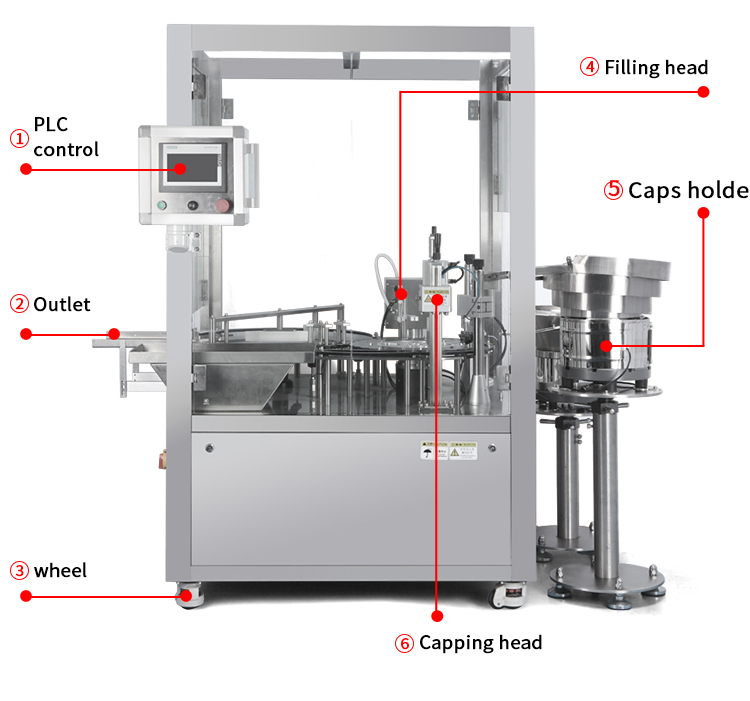
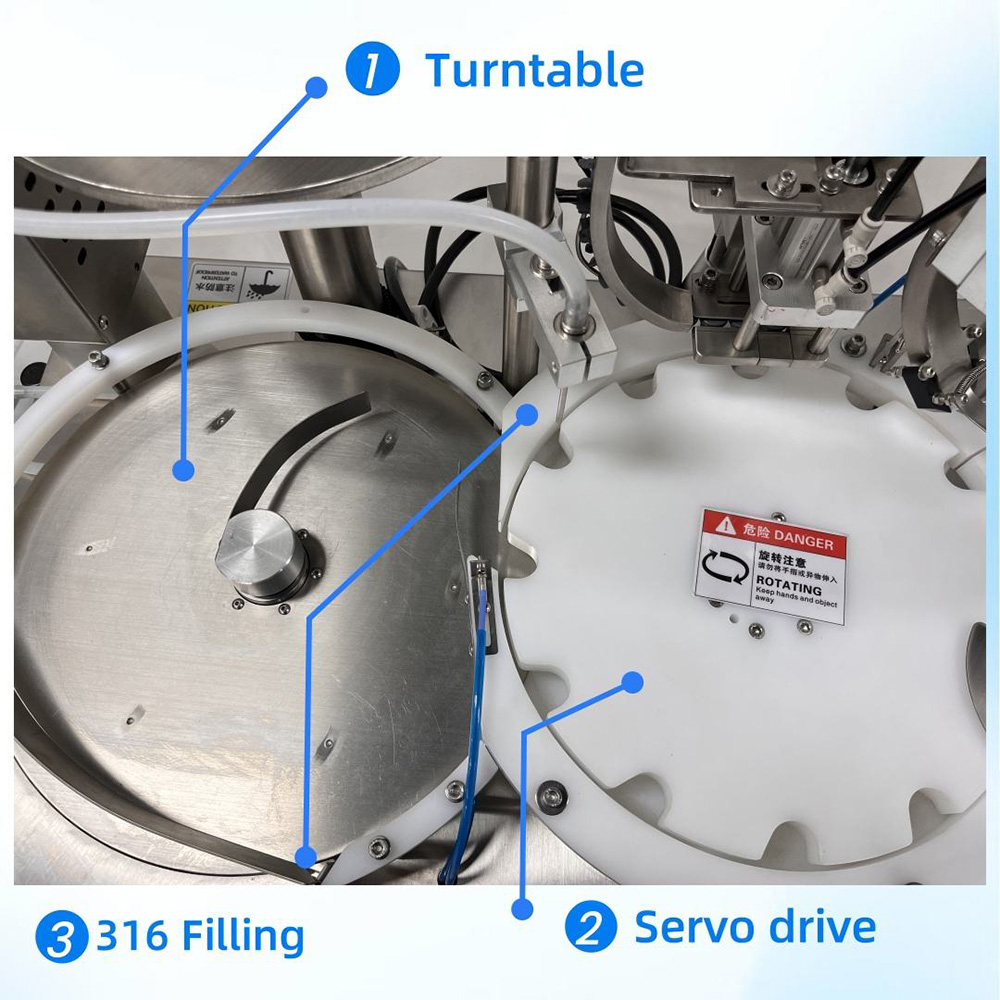
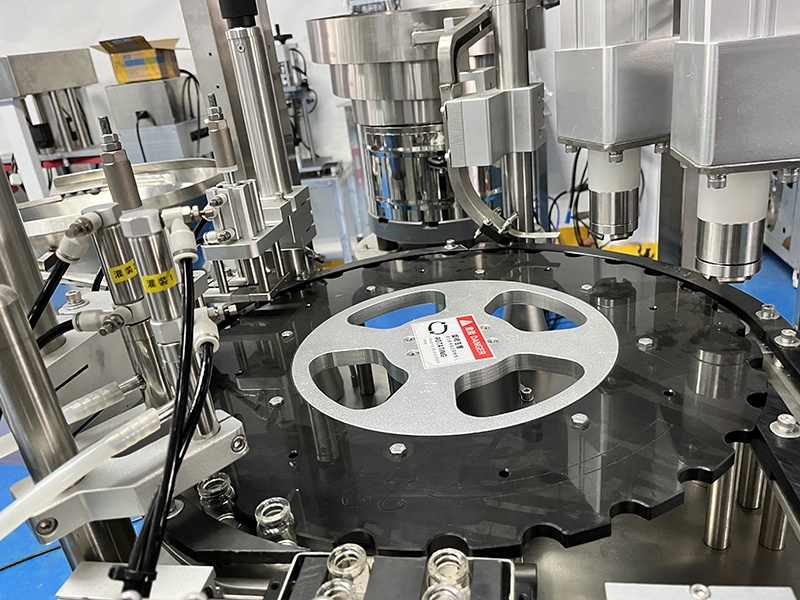
Pre-treatment stage: Bottle preparation and loading
Bottle sorting and loading: Empty vials are sent to the loading track through a sorting machine or manually. The sorting machine can automatically arrange the disordered bottles, ensuring the bottle mouths are facing upwards and the spacing is uniform, avoiding bottle jams.
Cleaning and sterilization: If it is for sterile preparation, the bottle bodies need to be cleaned by an ultrasonic cleaning machine to remove impurities, then sent to a tunnel oven or sterilization cabinet for high-temperature dry heat sterilization or wet heat sterilization. After cooling, they are sent to the clean filling area, maintaining A-level clean environment throughout the process.
Bottle inspection: Through photoelectric sensors or visual inspection systems, defective bottles with cracks, deformities, or misaligned bottle mouths are eliminated to prevent affecting subsequent processes.
Core Filling Stage: Precise measurement and material filling
Bottle positioning: Qualified bottles are sent to the filling station by the conveyor, fixed by positioning mechanisms (such as grippers, rotating discs) to ensure the bottle mouths are precisely aligned with the filling head, avoiding offset and leakage.
Material preparation: The liquid to be filled, raw liquid, or oral liquid is stored in the mixing tank in advance and transported to the filling system through pipelines. Some high-viscosity materials need to be equipped with a stirring device to prevent sedimentation.
Quantitative filling: Select the filling method according to the equipment type. Commonly used methods include piston filling (suitable for aqueous and oil-based liquids), peristaltic pump filling (suitable for small-dose and high-precision materials), and weighing filling (real-time calibration of filling volume). Multi-head filling equipment can simultaneously fill multiple bottles, and the filling head can adopt a submersible design, slowly ascending with the liquid surface to reduce foam generation and improve filling accuracy.
Filling volume detection: Through online weighing sensors or liquid level detection devices, the filling volume of each bottle is detected in real time. Products exceeding the error range will be automatically eliminated to ensure precise dosage.
Linked supporting stage: Post-processing and product output
Light inspection: Manual or fully automatic light inspection machines inspect the finished bottles for light detection, eliminating defective products with impurities, excessive bubbles, or loose seals.
Labeling and inkjet printing: The product label is attached to the bottle at the designated position by the labeling machine, and the inkjet printer simultaneously prints production dates, batch numbers, expiration dates, etc. Some production lines can directly connect to the packing machine to complete the packaging and storage of finished products.
Filling Machine Installation Precautions
1. After receiving and unpacking the machine, first check if the machine documentation is complete, and then check if the filling machine has any damage during transportation. If any missing documents or damaged machines are found, contact the manufacturer immediately for communication and resolution.
2. Install the filling machine according to the manual. Follow the requirements in the manual.
3. After the equipment installation is completed, reapply lubricating oil to all lubrication points.
4. With the machine's protection grounding in place, check if the machine rotates in the correct direction.