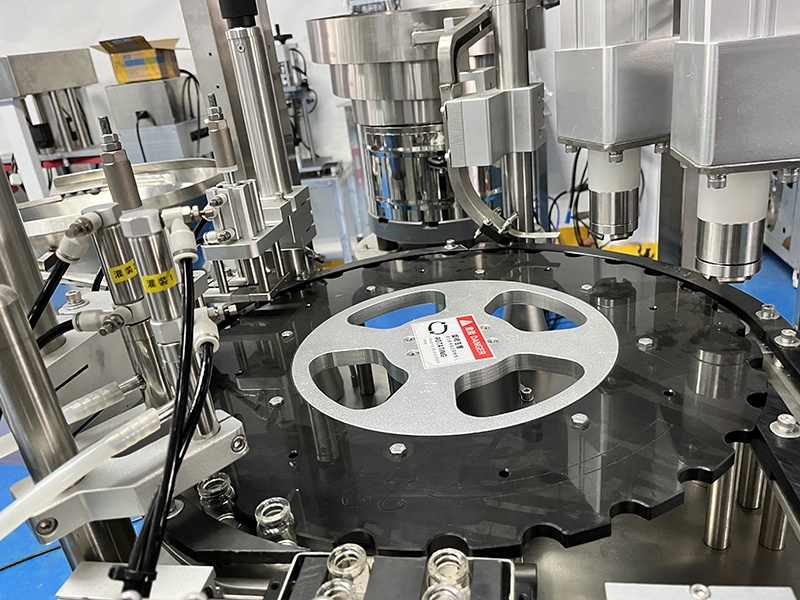
Practical Reference Suggestions for Replacement and Upgrade of Old and New Vial Filling Equipment
In the pharmaceutical industry, the replacement and upgrade of vial filling equipment is a critical measure for enterprises to improve production efficiency, guarantee product quality, and meet GMP compliance requirements. Many pharmaceutical companies face problems such as aging old equipment, insufficient accuracy, cumbersome operation, and inability to adapt to new production needs. Blindly replacing equipment not only increases investment costs but may also lead to poor connection between old and new equipment and production interruptions. Based on practical experience in the pharmaceutical industry, this article provides practical references for enterprises on the replacement and upgrade of old and new vial filling equipment, helping them efficiently complete equipment iteration while balancing compliance and production efficiency.
The core pain points of old vial filling equipment mainly focus on three aspects: first, insufficient metering accuracy, which cannot meet the requirements of small-dose and high-precision filling; second, outdated equipment structure without anti-drip and anti-residue designs, failing to comply with GMP aseptic requirements; third, cumbersome operation and inconvenient maintenance, which cannot adapt to new production processes. These problems not only affect product quality but may also lead to audit failures. Therefore, equipment replacement and upgrade are imperative, but they must follow the principles of "replace on demand, precise adaptation, and seamless connection" to avoid blind investment.
Before replacement and upgrade, the primary task is to **sort out your own production needs** and clarify core indicators: such as production scale (small-batch trial production / mass production), filling accuracy requirements, material characteristics (fluidity, viscosity), GMP compliance requirements, and the defects of existing old equipment (such as metering deviation, inconvenient operation, inability to clean). It is recommended to retain reusable high-quality components (such as 316L standard hoppers and some pipelines) to reduce waste; for severely aged and irreparable components (such as worn screws and stuck drives), replace them directly to avoid failures caused by mixing old and new components.
The core points of replacement and upgrade focus on three aspects: first, **equipment selection adaptation**. Prioritize equipment that matches your own production scale. Choose single-head filling machines for small-batch and laboratory production, and multi-head filling machines for mass production according to demand, ensuring accurate screw metering and stable servo drive; second, **structural compliance**. All product-contact parts of the new equipment must be made of 316L stainless steel with mirror-polished inner walls and no sanitary dead corners, meeting GMP requirements for aseptic production; third, **connection between old and new equipment**. The parameters of the new equipment (such as filling accuracy and bottle type adaptation range) must be compatible with the old equipment and production processes to avoid production interruptions.
During the replacement and upgrade process, pay attention to three key details: first, after the installation of the new equipment, 3Q validation must be completed to ensure it meets GMP requirements before being put into use; second, debug the parameters of the new equipment to be consistent with the production process and dosage standards of the old equipment, reducing product batch differences; third, provide good operator training to ensure they master the operation and maintenance methods of the new equipment proficiently and avoid production impacts caused by improper operation.
In addition, after the replacement and upgrade, properly dispose of the old equipment and establish a maintenance system for the new equipment, regularly calibrate the metering accuracy and check the wear of components. A reasonable replacement and upgrade can not only solve many problems of old equipment but also improve production efficiency, reduce compliance risks, and achieve long-term stable production.
In summary, the core of the replacement and upgrade of old and new vial filling equipment is "select on demand, compliant adaptation, and seamless connection". It not only avoids blind investment but also solves the pain points of old equipment, while meeting GMP requirements, helping enterprises achieve efficient, compliant and stable production, and laying a foundation for subsequent capacity improvement and product quality upgrading.