

The same as the Vial powder filling machine, how big is the difference between the one with dust removal and the one without?
In the powder production fields such as pharmaceuticals, medical aesthetics, and biological reagents, many enterprises when purchasing filling machines, will fall into the misunderstanding of "only considering the price and ignoring the dust removal configuration", thinking that "as long as it can be filled, it's fine". However, in actual production, it will be found that the powder filling machines with dust removal (negative ion dust removal + workstation vacuuming) and those without dust removal have a huge gap in production efficiency, product quality, compliance, and overall cost. We have been deeply involved in the filling equipment field for many years, and we have seen too many enterprises pay the price of rework, scrap, and violation due to ignoring the dust removal configuration. Today, we will use actual production scenarios to analyze the core gap between the two.
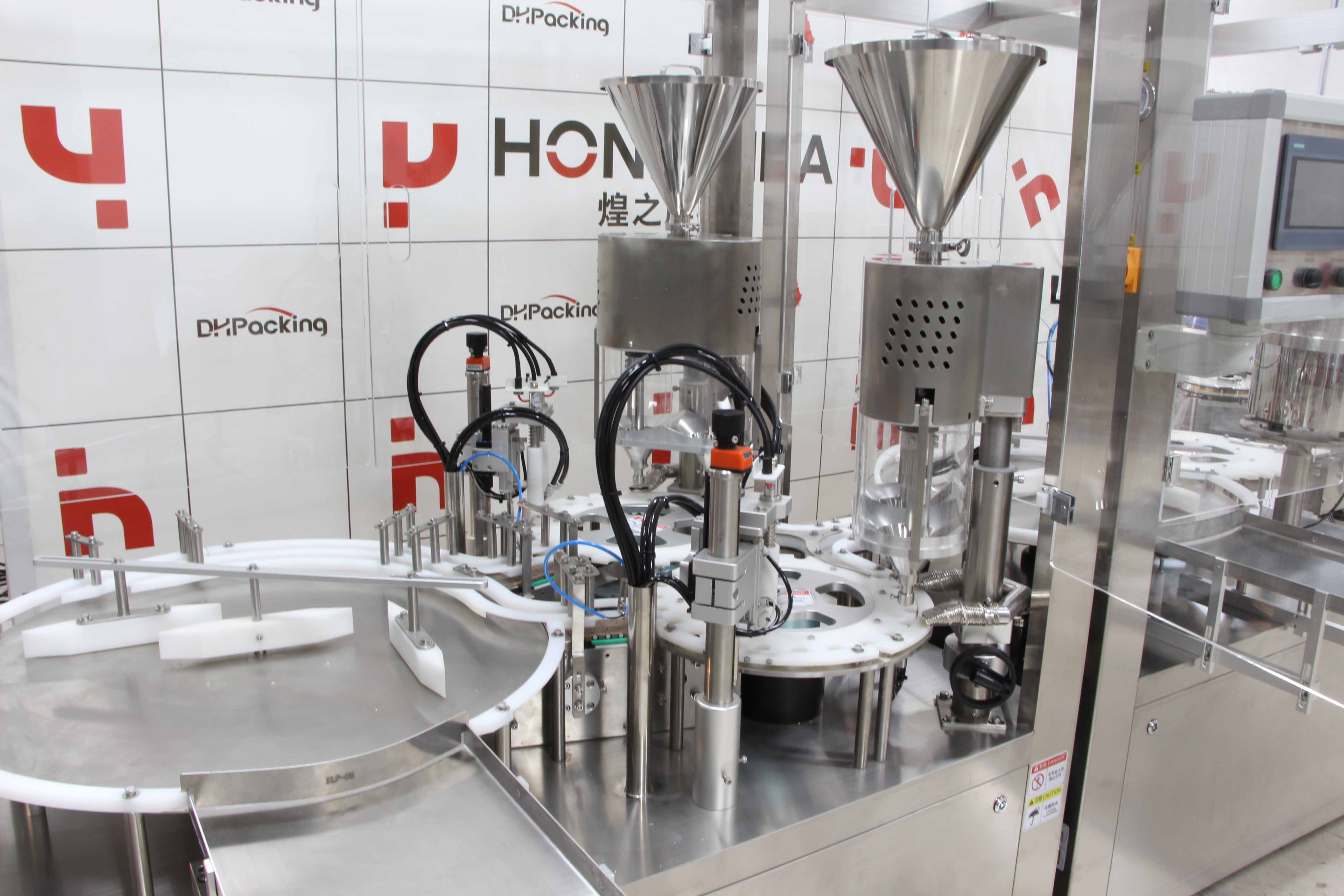
The first core gap: product qualification rate, a huge difference. The biggest flaw of the powder filling machine without dust removal is that the cleanliness cannot be guaranteed. The vials will adsorb floating dust during storage and transportation, without negative ion dust removal, the impurities in the vial cannot be removed, after filling, the powder is prone to be contaminated, resulting in caking, purity not meeting standards, etc.; the dust generated during filling will adhere to the bottle body and bottle mouth, causing poor sealing during capping, resulting in powder leakage, deterioration, and the product qualification rate is often less than 80%. While our equipment is equipped with a dual system of negative ion dust removal + workstation vacuuming, before filling, impurities in the vial are cleared, during filling, dust is captured, from the source to prevent pollution, the product qualification rate is stable at over 99.8%, completely avoiding batch scrapping.
The second gap: compliance, the key to passing GMP review. The pharmaceutical and medical aesthetics industries have strict requirements for production cleanliness, and the GMP standard clearly stipulates that powder production needs to control dust pollution and avoid cross-contamination. The equipment without dust removal, the dust generated during filling spreads to the workshop, will cause the workshop dust to exceed the standard, unable to pass the GMP review, and even facing production suspension and rectification. Our equipment, with a dual dust removal system, forms a closed loop, negative ion dust removal ensures the cleanliness inside the bottle, workstation vacuuming controls the dust in the environment, the body is made of 316L stainless steel, with no hygiene死角, fully meeting the GMP compliance requirements, allowing enterprises to have no worries about production.
The third gap: production efficiency and labor cost, the gap doubles. The filling machine without dust removal has serious dust during filling, requiring frequent manual cleaning of the equipment, wiping the bottle body, and additional personnel to clean the workshop. Not only does this slow down the production rhythm, but it also increases labor costs; once there is a clogged bottle or contamination, it needs to stop the machine for cleaning, further reducing efficiency. While our equipment, with a dual dust removal design, does not require manual intervention, combined with a regular bottle sorting plate, four-head synchronous filling, and double-head capping, achieving integrated operations of bottle sorting, dust removal, filling, suction, and capping, the single-shift efficiency is improved by 40% compared to the equipment without dust removal, and it can reduce 2-3 personnel, resulting in significant savings in labor costs in the long run.
The fourth gap: material loss and equipment lifespan, the hidden gap is more fatal. The equipment without dust removal, during filling, will cause a large amount of material waste, especially for valuable Chinese herbal powders and freeze-dried powders, over time, the loss cost is astonishing; at the same time, the dust will adhere to the metering components and transmission parts of the equipment, accelerating equipment wear and shortening the service life, increasing maintenance costs. Our workstation vacuuming device can recover scattered powder, reducing material waste, and avoiding dust erosion of the equipment, extending the equipment service life, and reducing the later operation and maintenance costs.
Many enterprises initially save on procurement costs by choosing equipment without dust removal, but later they have to bear multiple costs such as rework, scrap, violation, and high labor costs, which is actually not worth it. In fact, the powder filling machine with dust removal, although the purchase cost is slightly higher, it can achieve long-term cost savings by improving qualification rate, reducing loss, and saving labor, through improvement of compliance.
We have always adhered to the design concept of "clean production, efficient compliance", integrating negative ion dust removal + workstation vacuuming into the four-head powder filling double-head capping integrated machine, which not only solves industry pain points, but also helps enterprises control the overall cost. When it comes to powder filling machines, choosing a device with dust removal function not only ensures quality and compliance standards, but also helps enhance the core competitiveness of the enterprise. This is the fundamental difference between a dust removal-equipped machine and one without.